Friday, April 30, 2010

Sword & Sorcery Greyhawk - The Headless Harlot


What would a good Sword & Sorcery setting be without an iconic tavern?

The Headless Harlot

The Harlot is a notorious tavern and inn of Dyvers the Wicked, located just off the central plaza of the Boulevard, on the very edge of The Groves. This modern wood and plaster, five-story structure abuts a one-story stone structure from an earlier age. The tavern is named for the ancient marble statue of a beautiful girl, the head long-since broken off, that stands by the main entrance, a doorway covered only by several ragged strips of stained leather. There are no windows on the ground floor, or the topmost fifth floor, but the middle three stories have windows with wooden shutters. A narrow alley on the right side of the building leads to a small service entrance around back, and a wide rusty grate in the mouth of the alley leads down into the city sewers. Past the service entrance is a rickety stable that can accomodate up to thirty mounts.

The main entrance opens into the wide, main tavern room, which has twenty long tables with benches, a long bar across the back of the room, and a low stage off to one side. The floor at the center of the room is clear of tables and chairs and is partitioned off by fifteen burning lamps set into iron staves. The tavern room is typically full at all hours of the day and night with raucous patrons, and after dark musicians fill the stage while the Harlot's dancing girls entertain from the central area.

The second floor features four large common rooms, and the third and fourth floors each feature 16 small rooms as well as a locked storeroom and a communal jakes that empties out into the alley below. The common rooms are filthy and often dangerous, and the third floor rooms are on the squalid side. The fourth floor rooms are kept somewhat clean and can be comfortable and well aired thanks to the height of the shuttered windows.

The abutting stone building is an ancient, but still functioning, bathhouse, and is accesible via a guarded door from the main tavern room.

The Staff

The Harlot is owned by Argus Blackarm(F6), a tall and emaciated ex-freebooter whose left arm, while fully functional, appears to be made of some sort of black stone, rumored to be the effect of an altercation with a foreign sorcerer. Argus is nearly always present during evening hours, frowning at the antics of his patrons, and acting as his own bouncer when the need arises. On the few occasions he becomes inebriated, he may be encouraged to regale the crowd with tales of his days stalking the shipping lanes of the Nyr Dyv.

The Harlot employs two bartenders, Grolf and Hubert (each F3), who despite sharing no blood ties are practically indestinguishable from one another. Nonetheless, they are highly, and sometimes violently, offended when someone attempts to call them over by the wrong name. Also in Argus's employ is a large and seemingly ever-revolving staff of wenches(typically Thief1), guards(F2), cooks, stableboys, and servants, all overseen by Argus's right-hand man, Jalister, a gregarious and perceptive priest of the Eye (C4).

Also on hand are Argus's seven slaves, the Harlot's popular and attractive dancers (T2). The most popular of these is Blissanda, a dark-eyed beauty from faraway Ket, who is never allowed to dance until Argus determines the Harlot has broken even for the night. A dozen or so lesser slaves service the bathhouse and upper rooms.

Mysteries and Rumors

The Bathhouse - This ancient structure features twohuge, ornate baths, one of which is hot, and the other cold. Both baths are fed from wide openings in the bottom that lead to some unknown source of water deep below the earth. Rumors persist of the occasional patron being dragged down into the deeps by an unkown agency. The waters of the baths are rumored to have odd effects on the bathers at times, from healing diseases, to other, less beneficial effects. Statues fill the alcoves lining the building's walls, some depicting ancient gods.

The Fifth Floor - Rumors abound about the mysterious fifth floor of the Harlot. As far as anyone can tell, there are no stairways leading up it, no public ones at any rate. Nonetheless, residents of the fourth floor rooms report odd noises, music, and thumps from above.

The Basement - Its a little-guarded secret that the Harlot's basement features a gambling parlor and brothel. Access to it is expensive, and strangers are seldom welcome. Though ostensibly owned by Argus, there are rumors of financial connections to Dyvers' underworld.

Prices

Common room, night - 5cp
Common room, week - 3sp
Private room, 3rd floor, night - 2sp
Private room, 3rd floor, week - 1gp
Private room, 4th floor, night - 5sp
Private room, 4th floor, week - 3gp
Bathhouse, daily access - 1sp
Bathhouse, slave attendant - 2sp/hour
Brothel, services rendered - 1gp/hour plus tip
Gambling room, daily access - 1gp
Stabling, night, plus feed - 1sp

Pilsner, pint - 1cp
Ale, pint - 2cp
Stout, pint - 3cp
Wine, rough, goblet - 3cp
Wine, good, goblet - 1sp
Wine, fine, goblet - 1gp
Liqour, fine, glass - 1gp
Whiskey, rough, jigger - 5cp
Hookah, 10 minutes - 1sp

Meal, rough (course bread, dubious stew) - 3cp
Meal, good (good bread, identifiable meat, cheese, soup) - 5cp
Meal, extravagant (5 course, rare and exotic foods) - 1gp

Wednesday, April 28, 2010

Old School DM, New-School Players?


Its a common complaint on the interwebs, usually something along the lines of "I'd love to run (insert OSR game of choice), but all anyone around here wants to play is (insert D&D 3.5, 4E, or Pathfinder)". A lot of DMs will eventually face the choice of running a contemperary edition or running nothing at all. If you don't wish to take the latter option, here are some quick and easy House Rules that can make those new systems feel a little more "old-school":

Attacks of Opportunity
Get rid of these. One of the biggest "old-school" complaints about newer editions is how combat becomes too focused on the grid-board, and less in the imagination. Eliminating attacks of opportunity can go a long way toward getting rid of the mentality of manuevering pieces on the grid for the best advantage. Make sure your players know about this houserule at character generation time, because a lot of Feats and Skills can relate to AoO's. For PCs with special abilities tied to AoO's, like the Rogue's Sneak Attack, simply have the player describe how he is manuevering, and be more liberal than restrictive in allowing him to use these class abilities.

Level Cap
The biggest differences between older and newer editions tend to reveal themselves in high-level play. Don't be afraid to set a level cap on your game. I recommend 10th level as a good benchmark; numbers don't really get too crazy until then. You can also take a look at alternate xp progression tables. Doubling the xp's required for each level is a good way to extend low-level play, or you can just run them as-is and enjoy some good old-school endgame scenarious built around establishing strongholds. Again, be sure to let players know this going into the campaign, as many "new-school" players put a lot of emphasis on character "builds", which involves long-term planning of class, skill, and feat allotment.

Critical Hit Confirmation Check
Do away with this. It just adds another roll to what may be an already "swingy" combat. I highly doubt the players will mind the increased chance of a critical hit, and this can help combats be a bit faster. This houserule doesn't impact alot of feats and skills either, so its easy to implement.

Class/Race Selection
Don't be afraid to limit the classes or races available in your campaign. If you feel strongly that Half-dragon Favored-soul/Templars will be disruptive to the old-school feel of your campaign setting, try setting some boundries, perhaps making only the traditional races and classes available at first.

Skills
Player Actions should trump Skill Checks. For an old-school DM, gathering information about a lost city, dark cult, or infamous Megadungeon can turn into a whole night of fantastic role-play, unexpected situations, and cooperative world-building. Unfortunately, in many newer edition systems, you can reduce all that into one quick Skill Check. Let players know you won't be using just that Skill Check. Make them play it out. Skill checks should only come into play if the outcome of the situation, as modified by their actions, is somehow in doubt. Or, you can use those well-laid plans to determine a modifier to that skill check roll. A well thought-out and implemented plan should never fail just because of a flubbed roll, and a nat-20 remove traps check should never trump obvious bumbling and stupidity!

Game Balance
Newer edition adventures are often very linear, and are frequently defined by a series of encounters designed to be challenging for an oppopriate level, and provide the "proper" amount of xp and treasure to keep the game "balanced". If you're using a published adventure, take a bit of time to go through and adjust a few encounters up and down in power level. Once the players have gotten out of the expectation of balance, your sessions should proceed in a decidedly more old-school fashion, as players get out of the comfort zone of knowing that every encounter is winnable and start to do a bit more scouting, exploration, and research to balance the odds themselves. This is especially easy to implement in games where a level cap has been established.

Communicate
Be up front with your players about these "old-school" modifications to your campaign, and explain why you feel the modifications are necessary. Always remember that the elements of newer editions that annoy and repulse you may be the elements that your players really enjoy, so its important to compromise where possible, and focus on the elements you all enjoy in common. At the end of the day, getting together with folks and having a great time is far more important than any sort of "edition loyalty", and most rules are easy to modify to taste.

P.S. - Old School One Shots
Always keep a copy of your preferred OSR edition of choice with you. Its not unusual that real-life roadblocks can arise and players can be absent from a session, leaving you with the choice of skipping the game altogether that week, or running a one-shot for the players that are available. This is a fantastic opportunity to demo that old-school game you keep trying to sell them on!

Wednesday, April 21, 2010

Tuesday, April 20, 2010

Want to creep your players out?


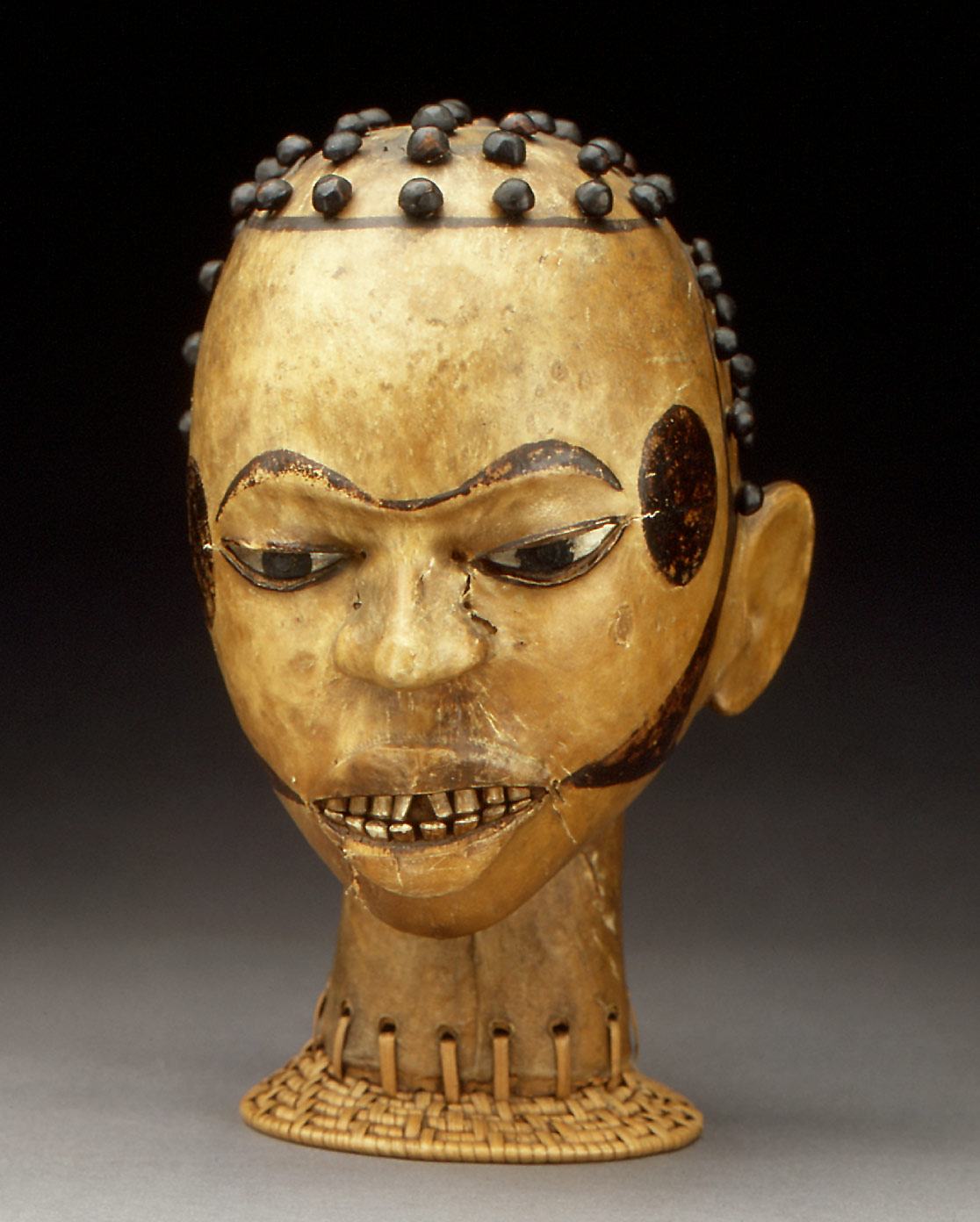
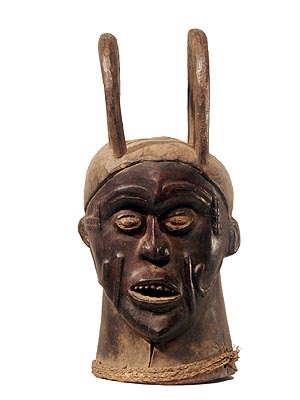
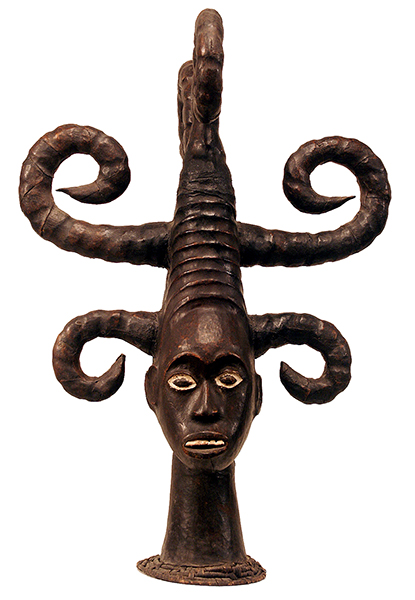
Then litter your Megadungeon with these bad boys.

Monday, April 19, 2010

Bob Bledsaw on the origins of the Wilderlands


"A group came to me asking me to monitor or judge a game for them which they had tried on four seperate occasions to play. After a brief look at the three books, I pointed out that many of the rules were incomplete and I would have to rewrite much of it before we could attempt a game. I had always loved fantasy and science fiction. Although a stereo systems designer at General Electric with limited free time, I reworked the game and designed a small dungeon located near Weathertop in Middle Earth.

Despite the misfit magic, this campaign grew to consist of around eight large hex maps from the Grey Havens to the Lonely Mountains and from the Iron Mountains past Mordor. We experimented with many combat systems and magic systems along the way. I had a gigantic dining room table which was filled with gamers and around thirty or more spectators from the local college and high schools. My original group began to beg me to run a session everynight and even tried chasing me down the road in automobiles when on family outings. Some all night sessions did not end until dawn and the magic system became less Tolkien like over time.

To permit the gamers to justify this more Vancian type of magic, I created a gate to the City State of the Invincible Overlord just before General Electric closed the plant I worked at. I will add more on the history of my campaigns later but suffice it to say for now that I have ran several campaigns besides the original based upon the Wilderlands. Lord Dunsany and Fritz Leiber are two of my most favorite storytellers.

Naturally, I placed in this world much of what I loved in my extensive library. This was prior to the publication of Greyhawk or any other city for this genre' that I am aware of. At the 1975 Gen Con, Bill Owen and myself sat at a small table where I sold the first City State installment with all four map sections rolled up to prevent creases."

RIP Bob.

Sunday, April 18, 2010

I'm an idiot.


Scanning the Lawn & Garden classifieds for a lawnmower today and I see the following:

"Nigerian Dwarf Kids - Unregistered (Waterport, NY)"

While the novelty of having unregistered Nigerian dwarf kids neatly manicure the lawn may appeal to some, I was relieved when my wife informed me they were probably referring to goats.

LinkWithin

Related Posts Plugin for WordPress, Blogger...