House Rule - Ritual Spell Casting
Preparation - When a Magic User or Cleric prepares their spells for the day, they may opt to leave one or more spell slots "empty". The magic user or cleric may then employ Ritual Spell Casting later that day.
Ritual Spell Casting (Magic User) - The Magic User may cast any spell in his spellbook, provided he has his spellbook with him, possesses the necessary components, and has an "empty" spell slot of the appropriate level. Ritual Spell Casting takes a minimum of one turn per level of the spell being cast, and may not be performed under duress or during combat.
Ritual Spell Casting (Cleric) - The Cleric may cast any spell allowed by his deity, provided he has his holy symbol with him, possesses any necessary components, and has an "empty" spell slot of the appropriate level. The necessary prayers to perform the Ritual must be performed in a consecrated area (such as a temple of that deity), otherwise the area must be consecrated, which requires a vial of holy (or unholy) water, incense, and takes a minimum of one turn per level of the spell being cast.
Why use this houserule? I think it gives spell-casters a little more flexibility - Vancian casting is all about preparedness and making good choices, and Ritual spell casting allows them to take this a step further and decide between filling their slots with spells that can be cast at a moment's notice in the heat of combat or some other challenging situation, or leaving a "reserve" of energy for those times when facing the unexpected becomes necessary - one never knows when one of the more obscure non-combative spells like speak with dead or know alignment may prove helpful. There's also the risk to consider of lugging your precious spellbooks into the hazardous environments adventurers frequent - those books are damned expensive to replace!
I like the Sword & Sorcery flavor of this houserule, too. Priests of dark gods muttering foul incantations over corpses chained to altars, old wizards absentmindedly rattling off spell after spell from their tomes as they pursue some inscrutable arcane goal in their laboratories, etc. As a referee, I think it also lets the players more fully explore the complex realm I've taken the time to create for them, as there may not be a steady supply of divination or exploratory scrolls available in a low-magic setting.


Interesting. This kinda fits what I had been thinking about doing for awhile now, but this post prompted me to make the proposal to my AD&D group. We'll see what they say.
ReplyDeleteIs beginning of the year again were i get to remember this great spiritualist Doctor called Dr.Agbazara who has the greatest powers on earth i have seen, he help me cast a spell that brought back my husband who left me for good four years. He is really a great man that is making happy today. i urge you to contact this great man if you are passing through any relationship or any problem and get them solve with his powers on: (agbazara@gmail.com) or call him on:(+2348104102662). because i am a living witness and i am from USA.
DeleteBEST DIVORCE SPELL CASTER
DeleteI recently saw a testimony about a spell caster of some sort in a blog I visit for relationship and dating counseling problems because i had been having serious issues with my husband and we had been married for 3 years,he just suddenly changed, he was returning my calls ,he started cheating, he was hurting me in so many ways i never thought possible and I just thought I should try it maybe out of desperation of some sort ..and I think for a thought about the spell caster called DR UGO WONDERS I contacted him At first everything felt dreamy and unbelievable, their consultations and solution was a little bit easy and strange and I was scared a little cos I heard read and heard lots of stories of fake spell casters, scams and i never really believed in magic.. I played along with a little hope and and faith and I was sent some few stuffs after everything and it worked like a miracle, everything went to a while new direction, I guess it was all good faith that made me read That particular post that faithful day.. I hope they could help other people too like they did a little and I got everything I wanted and wished for my husband, my family and my life back to contact the DR UGO WONDERS through is email and cell number at ::: generalspelltemple@gmail.com or his mobile number on +1 386-336-9876
BEST DIVORCE SPELL CASTER
I recently saw a testimony about a spell caster of some sort in a blog I visit for relationship and dating counseling problems because i had been having serious issues with my husband and we had been married for 3 years,he just suddenly changed, he was returning my calls ,he started cheating, he was hurting me in so many ways i never thought possible and I just thought I should try it maybe out of desperation of some sort ..and I think for a thought about the spell caster called DR UGO WONDERS I contacted him At first everything felt dreamy and unbelievable, their consultations and solution was a little bit easy and strange and I was scared a little cos I heard read and heard lots of stories of fake spell casters, scams and i never really believed in magic.. I played along with a little hope and and faith and I was sent some few stuffs after everything and it worked like a miracle, everything went to a while new direction, I guess it was all good faith that made me read That particular post that faithful day.. I hope they could help other people too like they did a little and I got everything I wanted and wished for my husband, my family and my life back to contact the DR UGO WONDERS through is email and cell number at ::: generalspelltemple@gmail.com or his mobile number on +1 386-336-9876
I really like this!
ReplyDeleteI'd take it a step further too, allowing a magician or cleric to cast a spell from levels above what they normally could, taking extra time per level above their ability. That would nicely simulate situations where the hero or villain has found the ancient arch-mage's spellbook to combat, or aid, the ancient evil.
Not bad, good work! Might have to steal this idea ;-)
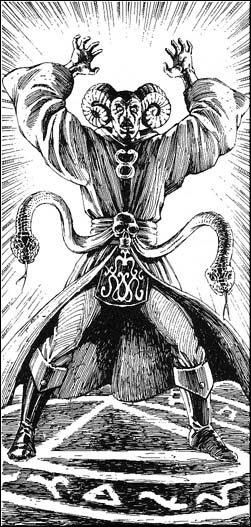
ReplyDeleteGood rule, and I like Tom's addendum. One question though: where did you get that picture of my graduate adviser? :)
ReplyDeleteNice idea. Solves the problem that some spells never get chosen/cast because they are too hard to predict the need and nobody wants to give up valuable spell slots.
ReplyDeleteWe go one step further and just do spell slots period. Of course there are more detailed rules to control it somewhat, but it does give greater flexibility, spells that never get cast finally get cast, and it speeds up preparation time and players don't agonize over what spells to pick.
I still think there is a place for ritual spells. Lots of divination spells, ressurect spells, and anything that takes more than a round probably should have been a ritual anyway.
@Tom - but you need to have some significant chance of failure if you can cast spells above your level - sort of like with scrolls that could fail.
Powerful rituals, whether dark or not, should have a chance of failure with unpleasant side effects, don't you think?
http://gnotions.blogspot.com/
That's a neat idea. I bet it will work out for your group. I know I'd take advantage of it!
ReplyDelete@Tom, I've been pondering the higher-level possibility too. I might wait and see if something becomes emergent through play.
ReplyDeleteInteresting concept, though I'd submit that it could entirely replace Vancian magic (but that's my bias showing). Also, in campaigns where clerics don't memorise spells, not sure there would be much benefit to this approach. Regardless, though, it does solve the I-wasted-a-slot-on-Floating-Disk problem...
ReplyDeleteAlso, that dude must have a hell of a time fastening his belt.
Considering it borrowed. Now if I can just find some good rules for casting beyond your level.
ReplyDelete-Eli
I like this. I'll be toying with something like this for my houserules doc. I really like the idea of the powerful stuff (like resurrection or some of the powerful divination spells and the like) being "rituals" - maybe even with more people adding their "power" to the spell. I'm considering limiting mages and clerics to 6th level spells, but having higher level spells available when they "combine" their power...or something.
ReplyDeleteAnyway, great food for thought...
That's an elegant solution to the problem. I will almost certainly adopt it as a DM and encourage the DM of my current game to as well, and not just because I play a m-u.
ReplyDeleteBTW is that a TSR rendering of Thoth-Amon? Their Thoth-Amon figure looks almost exactly like that (but not as well animated).
Yep, I believe that's Parkinson (CB2 - "Conan against Darkness!")
ReplyDeleteThis comment has been removed by a blog administrator.
ReplyDeleteI was going to do something similar (well, exactly like) this myself. In the end, though, we just did away with all pre-memorization and allow any known spells to be cast as needed.
ReplyDeleteThis is a great middle ground.
Just have to say that I have done this for D&D 3e and it works great. I agree with many of the posters that it could be used to do away with Vancian magic entirely.
ReplyDeleteI am Trisha, I want to use this possible means to appreciate one man i hold sincere gratitude and high esteem for his help and kindness he has rendered to me. I want to say A BIG THANK YOU to Lord WAKAMAN, indeed you are the WORLD GREATEST. without compromising words, Lord WAKAMAN helped me in getting back my long lost relationship and also bring back my life to lime light when i thought all was gone. I am a new creature now with the help of his powerful spell. friends out here please i plead with you search no further for spammers who act as real spell casters, the REALEST AND MOST TRUE SPELL CASTER is LORD WAKAMAN THE WORLD GREATEST. he is so true to his words and his words are substantial. contact him now on greatestlordwakaman@gmail.com he is more than willing to assist anyone who needs his help. greatestlordwakaman@gmail.com. I AM GRATEFUL LORD WAKAMAN.
ReplyDeleteIs beginning of the year again were i get to remember this great spiritualist Doctor called Dr.Agbazara who has the greatest powers on earth i have seen, he help me cast a spell that brought back my husband who left me for good four years. He is really a great man that is making happy today. i urge you to contact this great man if you are passing through any relationship or any problem and get them solve with his powers on: (agbazara@gmail.com) or call him on:(+2348104102662). because i am a living witness and i am from USA.
ReplyDeleteIts no longer news that DR Zadson of EDUDUZADSONTEMPLE@YAHOO.COM is a man sent by God to help the lonely,oppressed,deserted and broken hearted. It was recently i saw comments of how this man helps restore lost love in a very short while and i have been depressed for long after i lost my husband to another. I made contact with him and i was told i will get results in 2 days but i actually didnt believe that as i have heard that from others whom i contacted and yet nothing but to my greatest suprise it all happened as promised and i could not hold this joy but resulted to this blog to talk about the goddness shown to me by Dr Zadson. If you are lost or confused worry no longer and contact Dr Zadson on eduduzadsontemple@yahoo.com he is god sent.
ReplyDeleteI am very happy today for what God used Doctor Ogudugu a great spell caster to do in my life. I had misunderstanding with my husband in the past and so it led us breaking up for 3 years but one day i saw a post of Larissa West who posted on the internet that Doctor Ogudugu a great spell caster helped her with a spell that brought her Husband back so i decided to contact Doctor Ogudugu the great Spell caster to help me and he assured me that my Husband will come back to me. Luckily today i am very glad to write on this wall that Nick my husband has come back to me as the great spell caster Doctor Ogudugu said. Do you have a problem with your Husband, boy friend, girl friend, relations or in your office and you think you have lost them? Worry no more because Doctor Ogudugu the great spell caster can help you just as he helped me bring my Husband back.Contact Doctor Ogudugu today via Email: GREATOGUDUGU@GMAIL.COM or Call +2348066421534
ReplyDelete
ReplyDeleteLISA
Dr.OSUN spell brought my ex back to my arms within the period of 24 hours and the joy in my heart right now makes me want to tell the whole world about the great love spell caster Dr.OSUN. here is his direct contact you can reach him with whatsapp him on +2348132537313 and his email is drosunlovespelltemple@gmail.com get in contact with him and he will reunite your broken relationship just like mine, thanks....
HELLO!!!!!
ReplyDeleteI never believed in Love Spells or Magics until now: When I eventually found testimonials about this spell caster Lord Henry, and how he has helped many people to get their lovers and broken homes back, i immediately checked his website www.permanentspellcaster.com and contacted him through his email address permanentspellcast@gmail.com because I was absolutely desperate to get my husband back. Life without my husband was a real mess for me and my child. i wanted a dramatic change and I thought magic could be the solution. After discussing the resolution with Lord Henry, he gave me hope that he will restore my marriage. I felt confident that he will actually make my husband to return home and he did! It's fantastic what this great spell caster have done for me, his help is priceless! I don't know what I would have done without Lord Henry, he does his job so well, he is organized and highly functional, i believe he is the best spell caster i can count on when it comes to all kinds of spells, I was floored that his spells worked very well and fast. If you need help, contact him too on permanentspellcast@gmail.com ,, permanentspellcast@hotmail.com and
permanentspellcast@yahoo.com you can as well reach his WhatsApp on +2348100663964
Thanks to Lord Henry of Permanent Spell Cast www.permanentspellcaster.com for helping me restore my broken marriage. I never thought i could get my husband back after our 8 months of divorce, but the powers of Lord Henry proved my thoughts wrong by getting my husband back to me just within 3 days. For the months my husband left me, i hardly coped because i loved him so much though i really didn't knew what happened that he left home and filed for divorce after 3 years of our marriage. I emailed to Lord Henry on permanentspellcast@yahoo.com and WhatsApp on +2348100663964 for help regarding the divorce and he helped me with his powerful love spell that brought my husband back home to me. Thanks Lord Henry and i love you for the good works you have done for me and my kids.
ReplyDeleteGod bless you so much...
Thanks to Lord Henry of Permanent Spell Cast www.permanentspellcaster.com for helping me restore my broken marriage. I never thought i could get my husband back after our 8 months of divorce, but the powers of Lord Henry proved my thoughts wrong by getting my husband back to me just within 3 days. For the months my husband left me, i hardly coped because i loved him so much though i really didn't knew what happened that he left home and filed for divorce after 3 years of our marriage. I emailed to Lord Henry on permanentspellcast@yahoo.com and WhatsApp on +2348100663964 for help regarding the divorce and he helped me with his powerful love spell that brought my husband back home to me. Thanks Lord Henry and i love you for the good works you have done for me and my kids.
ReplyDeleteGod bless you so much...
ReplyDeleteI was in total despair when I found Dr. Todd. My life was going terrible and I didn't know if I was coming or going. I had just gone through a rough divorce, wasn't making enough money to sustain me and my children, and my 17 year old son had just gone to jail for the first time. When I talked to him, I immediately found a sense of peace. He was very honest with me and I could feel that. He also told me that everything would be okay. After my work began, things began to change. My bills were all caught up, the relationship I was in became much stronger, I was never FLAT broke, and my son was released from jail earlier than we expected!! I also completely got over the failed marriage and began to move on. And, received a better position at my job which will cause an $800 per month increase!! I felt completely comfortable with the work that was being done because I was always encouraged by Dr. Todd. manifestspellcast@gmail.com is the BEST!!!!
TESTIMONY;
ReplyDeleteMy name is Hidago Daniel. I made a promise to tell others the wonderful work of he who brought my ex girlfriend back to me. He is doctor UZOYA who is a spell doctor and was able to bring back my ex. My ex left me the very day she met her friend in my place, of which, unknowingly to her, I had nothing to do with her. She grew furious at the very sight of her friend and I was confused if she was initially mad with her. Days into weeks and weeks into months, my ex girlfriend did not speak a word to me as she went away. What was I to do? That was how i contacted doctor UZOYA on the Internet who after some procedures and progress, brought back my ex. Words are not enough to express my feelings and what doctor UZOYA has done for me. He really lifted a heavy load off my chest. To all those out there, please, don't think your situation is too primitive or too hard and complicated for anyone to understand. Contact doctor UZOYA and find joy once again, contact him on; driraborspellcaster@gmail.com also talk to him on +1(301) 909 8775
ReplyDeleteHAPPY NEW YEAR TO EVERYONE AS THIS YEAR 2019 WILL BE A BLESSED YEAR TO YOU ALL
Are you financially squeezed?
Do you seek Loan to settle your CHRITMAS AND NEW YEAR DEBTS?
Do you seek funds to pay off credits and debts?
Do you seek finance to set up your own Business?
Are you in need of private or Business Loan for various purposes?
Do you seek loans to carry out Large Projects?
Secure a Loan from this number one true loan providing company today and start up with something rewarding.
Their transaction is 100% guaranteed as they also ensure a cordial relationship with all clients.
They offer Loans with no credit Checks, No collateral, Easy steps, fast funding and low interest rate of 2%.
Why remain in a financial breakdown?
Free yourself from poverty today.
Get your customer loan application form today via email: elliotoliveloanfirm@yahoo.com OR elliotoliveloanfirm@gmail.com OR elliotoliveloanfirm@hotmail.com and BECOME DEBT FREE AND LIVE A HAPPY LIFE....
ReplyDeleteRead Up My Story Today as my story is a very special and unique one as is not like the numerous advert you always see online and also I want to be 100% sincere and truthful to you that there can never be any other online spell caster that can help you bring back your EX BACK to you other than DR OSCAR DILAN as he alone is 100% effective,dynamic and very reliable as 99.9% of other spell casters are not for real and can never help you solve your problems at all instead they will complicate your present condition OK SO BE WISE AND ALSO BE WARNED AND CONTACT DR OSCAR DILAN TODAY... MY OWN LIFE STORY / EXPERIENCES IS BELOW:
My Name is Mark Kelvin, From USA. I wish to share my testimonies with the general public about what this man called Dr OSCAR DILAN has just done for me , this man has just brought back my lost Ex WIFE to me with his great spell, I was married to this woman called Sharon we were together for a long time and we loved our self’s but when I was unable to make her pregnant for me and also give her al she needs she left me and told me she can’t continue anymore then I was now looking for ways to get her back until a friend of mine told me about this man and gave his contact email: oscardilan68@yahoo.com OR oscardilan68@hotmail.com OR oscardilan68@gmail.com .... YOU CAN USE ANY OF THE EMAILS TO CONTACT HIM as you won't believe this when I contacted this man on my problems he prepared this spell cast and bring my lost WIFE back, and after a month she became pregnant for me because he gave me some herbs to take also and when she went for a test and the result stated that she was pregnant am happy today am a FATHER of a baby girl, thank you once again the great DR OSCAR DILAN for what you have done for me, if you are out there passing through any of this problems listed below:
(1) If you want your ex back.
(2) if you always have bad dreams.
(3) You want to be promoted in your office.
(4) You want women/men to run after you.
(5) If you want a child/PREGNANCY SPELL.
(6) You want to be rich.
(7) You want to tie your husband/wife to be
yours forever.
(8) If you need financial assistance.
(9) How you been scammed and you want to recover you lost money.
(10)Stop Divorce
(11) CURE TO ALL KIND OF SICKNESS/DISEASES HERE
(12) Winning of lottery
(13) Cure To Hiv/Aids
(14) LOTTERY/LOTTO SPELL WINNING
(15) CURE TO HERPES AND ANY OTHER SEXUALLY TRANSMITTED DISEASES AT ALL...
(16) HAVE YOU BEEN SCAMMED BEFORE AND NEEDS TO RECOVER ALL THE DOLLARS/MONEY YOU LOST TO THESE FRAUDSTER ???.. CONTACT OSCAR DILAN AS HE HELPED MY FRIEND CALLED LEONARD CAPTAIN FROM USA TO RECOVER BACK THE SUM OF $300,000.00 DOLLARS HE LOST TO SCAMMERS ONLINE
Email: oscardilan68@yahoo.com OR oscardilan68@hotmail.com OR oscardilan68@gmail.com .... YOU CAN USE ANY OF THE EMAILS TO CONTACT HIM ...... YOU CAN ALSO CALL / ADD HIM UP ON WHATSAPP USING THIS MOBILE NUMBER:+2348077526136
I am a spell caster called Dr Ajayi Ololo, I was the chief priest to this great temple called OLOLO at the age of 18years, and now i am almost 60 years old man. I am telling this to the world to make them know that this temple has been in existence for years and we have been durable and truthful to all. Our work here is helping anybody to getting there heart desire, Over here in this temple we grant anything you want us to do for you and when you come to this temple you must see result of our work. NOTE: TO THE ONES THAT HAS BEEN DECEIVED BY THOSE ONLINE SCAMMERS, DO NOT COMPARE THIS GREAT TEMPLE WITH ANY OTHER SPELL CASTER THAT HAS RIPPED YOU OFF YOUR MONEY BY CLAMMING TO BE SPELL CASTERS. THEY ARE ALL FAKE AND SCAMMERS ONLINE THERE TO RIP WERE THEY DID NOT SOW, COME TO OLOLO SPELL CASTING TEMPLE AND GET YOUR HEART DESIRE WITHOUT STRESS. In this temple, we work with the spirits in the spiritual realm and they tell us how to solve any problem that you are facing and also i will want you to NOTE: THAT THIS SPELL CASTING DO NOT HAVE ANY SIDE EFFECT ON ANYONE, BUT JUST TO GET YOUR HEART DESIRE AND BE HAPPY. I Dr Ajayi Ololo urge you all that has the following problem 1.} We heal barrenness in women and disturbing menstruation 2.} Get you married to anyone of your choice 3.} Guarantee you win the troubling court cases & divorce no matter how what stage 4.} Ensure success in work and business 5.} Mental illness & bewitched 6.} Can?t sleep at night or walking at night 7.} Recover stolen property and whereabouts of people that hurt you. 8.} Bring supernatural luck into 9.} Extreme protection for those doing dangerous jobs like security guards, Bank manager, cash transporters, To mention but a few.11. Get your scam money back 12.} Bring back lost lover, even if lost for a long time 13.} Remove bad spells from homes, business & customer attraction etc. 14.} Get promotion you have desired for a long time at work or in your career.16.} Remove the black spot that keeps on taking your money away 17. Find out why you are not progressing in life and the solution 18.} Eliminate in family fights 19.} Ensure excellent school grades even for children with mental disabilities 20.} Stop your marriage or relationship from breaking apart 21.} We have cure to cancer 22.} COME HERE AND SOLVE ALL YOUR PROBLEMS HERE AND GET ALL YOUR HEART DESIRES HERE WITHOUT ANY-SIDE EFFECT ON IT. ANY KIND OF PROBLEM YOU ARE FACING IN LIFE SEND YOUR EMAILS TO: ajayiololo@yahoo.com . to get it solved in the next 5 to 6 hours.
ReplyDeletePowerful African Native Spiritual Herbalist Healer. Powerful Psychic Herbalist Healer, Voodoo Priest Master, Black Magic Witch and Palmist. Call/Text +27765274256
ReplyDeleteWelcome to the International Council of Witchcraft
A spell is only as powerful as the witch who casts it. In this day and age, most people do not have the experience or resources to cast effective spells.
The result is that the spell is ineffective or worse, the caster inadvertently allows dark forces into his or her life.
Contact a Spell caster - Sheikh Hussein Call/Text +27765274256
Love Spells
Are you in need of a love spell that works fast but don’t know anything about love spell casting?
Ask a trusted love spell caster to cast the most powerful love spell for your situation. We provide powerful love spells that work without ingredients or special tools needed.
Our love spells are meticulously customized to your situation and cast by the best love spell casters at our coven.
Whether you need a spell to bring back lost love or attract your soulmate, our love spells are guaranteed to manifest your heart’s desire.
Money Spells
We have a massive range of powerful money spells to win the lottery, remove debts, and manifest the lifestyle of your dreams.
Enhancement Spells
Our enhancement spells are crafted by the most powerful voodoo spell casters available online. We have a massive range of powerful beauty spells, male enhancement spells, and permanent weight loss spells that really work.
Spellwork Consultations - $100
Spell to Bring Back a Lover - Voodoo Spell to Bring Back a Lover - $275
Voodoo Obsession Spell - Powerful Voodoo Obsession Spell - $290
Powerful Break Up Spell - $335
Ultimate Full Moon Coven Ritual - $1,250
Spell for Abundance and Prosperity - $240
Spell for Career Success - $290
Ultimate Binding Spell - $335
Extremely Powerful Weight Loss Spell - $300
Most Powerful Beauty Spell - $335
Successful Business Spell - $500
Spell to Win the Lottery - $777
New Moon Manifestation Ritual - $850
Spell to Awaken Psychic Senses - $890
Spell to Get a Court Case Dismissed - $335
Witch Initiation Ritual - $1,250
Uncrossing Spell - $720
Stay Faithful Love Spell - $275
Gambling Luck Spell - $350
For Powerful Ancient Voodoo Spells
Contact Sheikh Hussein
Call now for more information
Mobile: +27765274256
E-Mail: sheikhhussein@protonmail.com
Visit: https://sheikhhussein.com
I want to tell everyone here about how Dr Ilekhojie changed my fate. I was working as a saleswoman in an automobile company for almost 10 years and I barely got commission to pay my bills while a particular colleague of mind was buying houses. I was confused about her because everyone was envious of how much commission she made. I didn’t understand what was wrong because I was good at my job and there was nothing extra that she was doing that made her different and for almost 2 years I could not summon the courage to express myself to her. One day as she gave me a ride, I pleaded with her to give me some tips and opted to learn from her but she said I was better at the job which made me more confused because evidently, she was better. After many conversations, she informed me of Dr Ilekhojie who performed a good luck spell for her which is what has made her exceptional. She gave me his contact and asked me to talk to him and do whatever he asked me to do. It has been six months now and I just bought my first house and saved enough money to send my twin girls to college. I have been broke and homeless and would never imagine that I will own a home this soon. Thank you Dr Ilekhojie. Ask him for help and with his permission, I leave his direct contact number (+2348147400259) and Email: gethelp05@gmail.com
ReplyDeleteTo all who read this….You must have faith. There are greater forces at work than you can imagine. It will get better and each of your situations will improve whether it is what you intended to happen or not. I have my ex back this week and we are happy together, I highly recommend any one to Ultimate Spell for whatever problems you are experiencing whether is love, protection, money or psychic powers. she is the real deal.{ultimatespell666@gmail.com} https://rb.gy/zavk50
ReplyDeleteI have cried to my husband’s family to save our marriage at least for the sake of our kids. He is just fooled to have forsaken his family for a university girl, I am so depressed to the verge of committing suicide but when I look at my 7 years old son I just can’t anymore. Just 4 days ago my I was told they went to Bahamas for vacation when he is still being payment on his child support, I have sold my car just to keep paying the mortgage. I have given my all to my children and left with absolutely nothing but my breadth. My sister saw my condition when she came to see her nieces and Nephew, she forced me to contact, drjohnsoco@gmail.com, Since that moment my life has changed. I has just been 24 hours and guess what? I have my car back, my husband is back home, and left the stupid bitch in Bahamas. I have never seen anything work this fast in my entire 53 years of my life. My husband gave me his car, and drove me to court yesterday to renew our vow. I am so happy that my marriage is working again and things are back to normal in just 24 hours. My husband contacted me immediately the love dr Finished the spell. It was instantly. I am still in shock waiting to see how long this will last. But for now it feels like heaven, because my husband is right inside with me, just like we first met when I agreed to marry him. The love doctor said it is forever. I will keep testifying if this spells forever just like he guaranteed. Go get your lover back now......Email: drjohnsoco@gmail.com
ReplyDeleteCALL/WHATSAPP +44 7833 853025 ..