Monday, August 31, 2009

New Class - Megadungeon Explorer


Megadungeon Explorer

Prime Attribute - Int 13+ (+5% xp)
Hit Dice - 1d6+1/lvl (max 9, 2hp/lvl after)
Weapons Allowed - All
Armor - Chain or lighter
Shield - Yes

Some adventurers make a whole career of exploring the depths of the Underworld in search of riches, lost magic, and forgotten lore. Some delve simply because, as mountain climbers say, "its there". These aggressive treasure hunters must hone a wide variety of skills to survive in the underworld, and their abilities reflect this. They fight only when they must, relying rather on their quick wits, but can wield a blade with aplomb when forced to do so. Megadungeon Explorers use the same combat progression as the Cleric, but will favor only the lightest armors, never wearing anything more restrictive than chainmail, and seldom even that.

Megadungeon Explorers of 9th level or higher may found a stronghold (sometimes called an "Institute"), often based in the town or city closest to their Megadungeon, if not actually within the dungeon itself, and will attract 2d8+1 like-minded individuals. Megadungeon Explorers often serve as party leaders, as many adventurers are happy to rely on their expertise when exploring the dark halls below.

Lvl/ Save/ Xp Needed
1/ 15/ 0
2/ 14/ 1800
3/ 13/ 3600
4/ 12/ 7500
5/ 11/ 15000
6/ 10/ 30000
7/ 9/ 50000
8/ 8/ 80000
9/ 7/ 130000
10+/ 6/ +80000

Dungeon Sense
A Megadungeon Explorer will notice traps and secret doors simply by coming within visual range of one on a roll of 1 on a d6. If actively searching, they will detect traps or secret doors on a roll of 3 or less on a d6.

Stealthy
Megadungeon Explorers, if alone and wearing leather or no armor, can sneak or hide successfully on a roll of 3 or less on a d6.

Alert
Megadungeon explorers are seldom caught off-guard, and can avoid surprise 50% of the time.

Spell Use
Megadungeon Explorers of 4th level and above can use magic user scrolls, and may memorize a limited number of spells (though they do not gain bonus spells of any sort) according to the chart below:
Level: Spells
1-3: none
4-5: 1 first
6: 2 first
7-8: 2 first, 1 second
9: 2 first, 2 second
10+: 2 first, 2 second, 1 third

Saturday, August 29, 2009

Megadungeon Design and Philosophy - Part 3


The Importance of History
Adding an historical background to your Megadungeon can really draw the players deeper into your adventure, and give them a lot to do outside the dungeon, as well as help them have goals to accomplish within the dungeon itself, as opposed to just wandering haphazardly from chamber to chamber. Some good examples of history at play in the Megadungeon are available at JM's Grognardia, where he often details the sessions played in his Megadungeon, "Dwimmermount". As his campaign progresses, his players gradually learn more and more about the location and some of the strange stuff within it, and even research matters further when they are out of the dungeon.

With my own Megadungeon, the Forsaken Halls, as I designed the first upper levels, I tried to keep a basic sketch of the history of my Megadungeon in mind, and let that help me shape the actual look and physical design of the place.

The Forsaken Halls were originally an enormous bunker of sorts, the last defensible bastion of a dark empire destroyed by the forces of light roughly 150 years ago. The (known) main entrance to the dungeon is known as the Valley of Stone Faces, and lies between two rocky arms of a mountain that rises up from a barren heath, devastated all those years ago. Across the heath are the ruins of a city, once the capitol of that fallen empire.

The history of the dungeon goes back even farther, as it has been used by a long succession of masters. Before the Dread Emperor's time, the place was an underground monastary of sorts. Before that, the place lay "empty", full of dangers and hazards, much as it does now. And before that, well over a thousand years ago if the oldest texts on the place are to be believed, it was home to a lost race, vaguely human-like in appearance as depicted in some broken and weathered friezes on display.

Myth, Rumor, and Legend
Obviously, so much history can get cloudy as time passes. Much myth, legend, and rumor can take shape, obscuring the true history of the Megadungeon, and giving explorers quite a chore in figuring out what is fact and what is fiction. The towns closest to your Megadungeon should be boiling cauldrons of rumor, with every shopkeeper, horseshoer, and barmaid in possession of some bit of Megadungeon lore, from the wildly fantastic, to the strangley accurate.

It good to keep a list of these rumors handy, say 6 or 10 at a time, and keep them tucked away in your DM notebook to give out whenever your players are in town. It could look something like this:

1- Two groups of explorers entered Halls last week, neither has returned (true).
2- A war party was spotted leaving the Halls last week, headed into the wilds (true).
3- A powerful elven maiden wanders the deep Halls, looking for a worthy husband (false).
4- A dragon has taken the Troll Gardens for its own, there is a troll at the Blade & Sickle looking for help (false).
5- The stars are in alignment, the Dread Emperor shall return ere long (?).
6- A secret door has been found in one of the Stone Faces (true).

As each rumor is given, either strike it off, or modify it a bit to retell it, thereby reinforcing the rumor with repeated tellings.

Myths and legends are a bit more complicated, and need a bit more work, but are a good way to give your players a few different clues at once, as well as reinforcing the idea that they are exploring a place that truly is, well, Mythical and Legendary. A legend might look something like this:

"Guard your thoughts well, young explorer, or face the fate of Sir Lornly of Pells. Sir Lornly was a mighty warrior, and a legend in his own right before he even came to challenge the Halls. It is said that Lornly feared no man, and no beast, and was possessed of an unshakeable resolve. When he passed through the Valley of Stone Faces, it is said they all cast down their eyes in respect. He took not food nor water with him, for he swore he would only need his courage to win through to the Black Gates and beyond.

One moon later, only a single lowly retainer of Lornly's retinue emerged from the Halls. He told a tale of the brave knight hacking his way grimly through the Halls, overcoming the Trials of the Iron Paths, even cowing the Guardian of the Great Stair, only to arrive at the Grotto of the Oracle. 'Pass not this way, Warrior', the Oracle is to have said, 'for I know all things, and your ignorance is your only shield!'. Lornly scoffed at this, answering the Oracle, 'It is known far and wide that I fear no man nor beast, what can you possibly tell me that will shake my just resolve!?'. The Oracle, sighing, bade the knight draw closer, and when he did so, whispered into his ear at length.

Then Lornly is said to have cried out in anguish, and stumbling away, fled the chamber, leaving his astonished retinue gaping. They never saw him again, and without his protection, the denizons of the Halls picked them off one by one as he fled to the surface, only one making it back to civilization. To this day, no one knows Lornly's fate, but it is rumored he died in the Halls, leaving his storied blade 'Spell-Breaker' waiting, discarded, for some wiser soul to find.

When pressed to reveal what had so broken the famous knight, the maddened retainer could only remember overhearing a single name, 'Nerelee'. To this day no one who that was...".

This simple legend reveals some information I want my players to have about my Megadungeon:
1. The Stone Faces may be supernatural in origin.
2. The Oracle of the Grotto is not to be trifled with, and bears further research.
3. A legendary magic sword is lost within the Halls.
4. The name "Nerelee" may bear further research.
5. There is a Great Stair, which may or may not still have a Guardian.
6. The Iron Paths may bear further research.

Megadungeons and the Local Economy
Another important consideration is the Megadungeon's effect on the local economy. If it is far out in the Wilderness, there may be towns and villages that act as "gateways" to the dungeon, a common starting point for expeditions. Local shops and merchants will be sure to have travel gear, mounts, and livestock on hand to sell, usually marked-up considerably. Opportunistic locals may target the party for scams, or attempt to sell them maps or documents of dubious worth.

If the Megadungeon has a town or village nearby, then it is likely that the place will have whole industries based around explorers to their little tourist attraction. In my campaign it is the ruined city, not the Megadungeon, that draws the most traffic to the area, and has the greates impact on the local economy:

"The ruined city is a popular site for treasure hunting and excavations, not unlike the Valley of the Dead in Egypt, and a river town, called Tome, has sprung up around the (largely abandoned) fortress (constructed by the forces of light to watch over the place) to service the seasonal influx of traders, diggers, and antiquity dealers. The Halls are avoided by all but the most daring treasure hunters, as it is known degenerate humanoid races lair within, an infestation that has grown far worse than the local authorities realize (or would admit)."

The nearest community to my Megadungeon is "Tome", "originally a simple garrison tower on a rocky knoll, to watch over the nearby Halls. Also, a short distance upriver, was a small monastery housing a scholarly order of monks dedicated to the study of the lore and ruins of Anslore. Slowly, as the legacy of the dark empire faded into the past, traffic to the area increased. Rich in resources such as timber and firestone (coal), Tome became a hub for scattered mining and logging camps. Then, as the antiquities trade became more profitable in the increasingly stable kingdoms to the South, more traders, tourists, and treasure hunters began to frequent the area. A profitable service industry sprang into existence to see to all these new residents and visitors.

Slowly, the land along the river between the monastary and tower filled with inns, shops, forges, and markets. Permanent wharves were set up along the river bank, the marshy shores were reinforced with stone, and a natural wide point in the river dredged out to accomadate regular barge traffic. A wooden stockade was added to the town after a series of bandit raids, and this was replaced by a permanent stone wall and four stout guard towers after the Orc Raids of 1322PA.

While the old keep fell into greater and greater disuse, the monastary thrived and became a college of ancient and esoteric lore, the Royal College of the Ebon Tome. "Tome", the township, was constitutionalized in 1335PA, and the first Sage-Mayor elected by the collegium the following year. "

As your Megadungeon takes shape, so too should the history, legends, and economy, all of these elements helping, as much as the dungeon itself, to bring your setting alive.

Wednesday, August 26, 2009

Megadungeon Design and Philosophy - Part 2


Ceilings
One of the most easily overlooked (or is that underlooked?) features of the Megadungeon is the humble ceiling. More so than walls and floors, even. Ceilings suffer from a sort of "out of sight, out of mind" syndrome, and unless detailed in explicit flavor text, just gets skipped over. Adding some discussion of the ceilings can really give depth (or height?) to your rooms, chambers, and caves. Here's a quick table to randomly determine ceiling type, or pick and choose as desired:

(d20)
1. Cut from Natural Stone
2. Vaulted
3. Domed
4. Frescoed
5. Oculus (Dome w/sky-light)
6. Bas-Relief
7. Sculptured
8. Murder Holes
9. Sound Baffles
10. Flat
11. Arched
12. Decorative Molding
13. Wood Joists
14. Wood Paneled
15. Caisson (ornamental asian style)
16. Arcade (a succession of arches)
17. Rough Natural Stone
18. Dirt with Hanging Roots and Vines
19. Cavern / Stalactites
20. Illusion (appears to be open sky above, etc).

Grouping
Another way to give your Megadungeon a bit more realism is to consider how your grouping the monsters within it. Encountering some orcs, then some kobolds, then some more orcs, then some trolls, and then some more kobolds, can give them impression that the setting is a bit more random than is realistic. The Megadungeon environment is a harsh one, and birds of a feather will no doubt flock together, as often as possible. If you've randomly determined several chambers are full of orcs, rearrange things so those orcs are close together. Give them some tribal insignia, maybe divide them into two or more tribes if you like.

Grouping not only gives your Megadungeon a more realistic feel, it will help open the door for more roleplaying, give your players a chance to get involved in the politics and power structures of the Underworld. If the basilisks on level four are giving the party a hard time, they may be able to negotiate with the nearby Trolls of the Roasted Halfling, who have long coveted that territory. It will also help your players focus a little more on resource management, and lead to roleplay opportunities outside the dungeon, such as seeking out a reliable source of Stone to Flesh scrolls for that expedition into the basilisk caves, or researching the religious heirarchy of Bugbears for some good ideas on negotiating or intimidating the War Tribe occupying and guarding the Grand Ramp down to level six.

Other power structures can be used for grouping as well. Like-minded or subservient creatures may cluster around religious centers, "agricultural" areas, or powerful "alpha dogs" like Liches, Dragons, or Rakshasas. This will give smart groups the opportunity to clear a large area of foes through careful planning and resourcefulness, as removing the head organizer of a grouping can cause them to flee, disorganize, or lapse into ambivelance. Diplomatically inclined parties can also negotiate for safe passage through a grouping, or even bribe their way through or offer to help out against a competing power.

The Mythical Underworld and Dungeon Ecology
In the game's earliest days, little thought was given to the "ecology" of the Megadungeon, that is to say where everyone got their food from, fresh air, breeding, or even where they poop. From an old-school perspective, these things just aren't very important, but occasionally a player may wonder about these things, or question the level of "realism" in the dungeon.

The Megadungeon as a Mythical Underworld is your best friend when these considerations arise. Philotomy Jurament discusses the subject at length here, and its an excellent thing to keep in mind as you're designing your Megadungeon. Monster's just don't need a "realistic" reason to exist, or subsist, in the Megadungeon. While the uppermost levels of the place may, indeed, be grounded in the material world, say the basements of wizard's tower or the underground fortress of a dark overlord, at its bottom-most roots, the Megadungeon is an extension of the mythical Underworld. It is a supernatural place, and need not follow the laws of our earthly plane.

Similarly, its denizens need not follow those earthly laws. At their most mundane, the humanoids in the Megadungeon are merely squatters, they need not breed and live out their lives in this environment, and their daily fight for survival may be as difficult as that of the adventuring parties that encounter them. At the other end of the spectrum, the monsters themselves can be presented as being more supernatural in origin. Rather than a tribe of goblins being shoehorned into following the earthly requirements of a tribe of aboriginal humans, as they are often presented, it can be far more rewarding to present them as explicitly unnatural. Perhaps they are spawned from the darkness in the depths of the Megadungeon, and feed on the fear and nightmares of their victims, rather than normal food and water.

Never forget, unless the party's main opponents in the dungeon are human, their adversaries are drawn almost exclusively from our own human myths and legends. There is no real reason to try and force human rules onto these creatures, who from the beginning have been presented as being beyond human understanding: elemental and capricious entities of unknowable origins, with unfathomable designs and motivations, united only in their malicious intent toward the human race.

Stay Tuned
Part three of Megadungeon Design and Philosophy will cover historical research in your campaign world, the effect of the Megadungeon on the local economy, the value of myth and rumor, and more.

Tuesday, August 25, 2009

Torgo Tuesday!

So, last Saturday morning I noticed the wives had not been fed, which always makes them ornery, so I went in search of Torgo, who was obviously shirking his duties, yet again! After some hunting, I discovered him dancing wildly around in the courtyard. Despite several commands to stop, he ignored me and kept dancing, so I put a couple of plastic bb's across the back of his neck with my Airsoft (a fun little toy, and reasonably safe!):


Which never fails to get his attention. Apologizing obsequiously, he hobbled up and I could see that he was using my IPod! Furious, I banished Torgo to an afternoon of slopping out the lower basements of the Ravyn estate, which tend to flood during the late summer rainy season.

Curious as to what could so thoroughly distract Torgo from his duties, I checked the playlist on the IPod and discovered he had been listening to one of my favorite "gaming" albums, "Legend" by Clannad. If you don't already know, this is the soundtrack from the Legend of Robin Hood series put on by the BBC in the 80's and broadcast by PBS here in the US. When folks talk about nostalgia in gaming, this show always comes to mind.

Throughout high school, Saturday was game day, starting late in the afternoon, and usually lasting far into the night. But before gametime, I was always sure to watch Dr Who (the inimitable Tom Baker in those days) and Robin Hood before setting out for the gaming garage. If you can find this gem of a record, its a wonderful piece of Celtic fantasy music. I almost forgave Torgo. Almost.
Speaking of nostalgia, check out Atom Kid's post on Shogun Warriors! I had the one pictured below, as well as a menacing black one that shot missiles out of its knuckles. These were the best, and in perfect scale (for toy giant robots) with my beloved HO-scale toy soldiers. Fun times. I can't wait til I'm old and senile enough that the family will let me get away with sitting happily in the backyard again and whiling the day away with epic battles between giant robots (sigh)!

Monday, August 24, 2009

Megadungeon Design and Philosophy - Part 1


There are certainly many ways to design a Megadungeon. In fact, one might argue that there are as many different ways as there are DMs, and each of those DMs might actually have a few different approaches they might be working from on different projects. Nonetheless, there are some good, common sense points to be made regarding the subject:

Think Big
Think about the number of rooms you want to detail on a given level (say, 42), and then multiply that by two, or even three. That's how many rooms you really have on that level. I'm not saying you should detail three times as many rooms, but that Megadungeons need empty space. Its important to the whole concept. The Megadungeon shouldn't feel like a series of consecutive rooms, each filled with its own monster, treasure, and trap to overcome.

A Megadungeon level should convey a feeling of "immense", "unending", etc. In other words, there should never really be a sense that a level should be "cleared", as there is with a more conventionally sized dungeon. The motivation in delving deeper in the Megadungeon should come in your presentation - helping the party realize that the rewards in treasure and xp will grow ever larger, the deeper they dare to go.

All those empty rooms help convey that feeling of BIG, and they also give you room to flex your improvisational chops a bit. Fun DMing is not, imo, just reading off a bunch of predetermined encounters, but getting to interact with the world just like the players get to. Keeping a bunch of unfilled rooms lets you dig out the randomization charts, add stuff to further the plots that will develop in play via the characters' actions, and let you provide fresh areas to explore for new 1st level parties, whether that be from DMins multiple groups, or because of the occasional TPK!

Think Small
The best way to make the Megadungeon environment feel alive to your players, as opposed to being just a collection of random squares and rectangles, is to focus on the details. Megadungeons can take years to design; who wants their players to just rampage through it at maximum speed? If you want your players to slow down and enjoy the place, give them a reason to.

Always remember to take the players' senses into account. The Megadungeon should vary between ominous, tomblike silence, and a constant buzz of background noise. Stuff like distant screams, wails, clangs, crashes, trickles, vibrations, gongs, crackles, etc will usually prompt investigation and keep players alert and, most importantly, nervous.

The eyes are as important as the ears. Its all too easy to allow the Megadungeon to slide by as featureless gray walls. Give them some color. Make that 100' long corridor be composed of yellow and purple brickwork, held together with some bizarre inky black plaster, each stamped with a mason's rune from a bygone age. Or have the floor of that supposedly natural cavern appear to have been inset with checkerboard-like black and white marble tiles. These simple features will make even the emptiest rooms memorable, and players will no doubt want to take their time exploring further, maybe even conducting research outside of the dungeon at the local library or museum, etc.

Smells, temperatures, air quality, air flow, "weird feelings", all are vital to bringing the Megadungeon off of that sheet of graph paper and placing it deep into the players' imaginations.

Connectivity
One common mistake, easily made, is to place too much emphasis on the levels, and not so much on the connections between them. Without vivid, detailed, and well-thought connections between the levels, all you really have is a collection of ten different dungeons, linked weakly together by the odd stairwell.

Its important to get a three dimensional image of your dungeon. Think about where the levels connect, and design the levels around those connections. Think about how massive places in real life are organized, be it your local shopping mall, theme park, business centers, urban districts. Notice how things are grouped around and organized according to connectivity. High traffic areas are important, to vendors, police, even criminals. As you move away from those connections, things get smaller, seedier, more spread out, darker, etc.

You can apply those same grouping tendencies to the connections in your Megadungeons. Areas near the main connections between levels may often feature larger chambers, great halls, etc, with more traffic, special guardians, and depending on the amount of adventuring traffic, may not have as much in the way of treasure. Similarly, as you move away from these connection points, things will get more spread out, traffic will decrease, and many chambers may not have been disturbed for a long time, which means the possibility of greater rewards.

For the actual connections themselves, try and detail them beyond the usual "stairs down". You could use huge, ballroom-style staircases, with rich marble steps and ornate balustrades. You could have sweeping, concave ramps obviosuly suited for more alien traffic than human. Immense waterfalls, underground cliffs, rickety, swaying elevators, wind-filled chutes, platforms raised and lowered via water pressure, and anything else your imagination can devise.

Stay Tuned
Next installment will discuss Grouping, the Nature of the Underworld, the importance of ceilings, those two dirty words "Dungeon Ecology", and more.

Friday, August 21, 2009

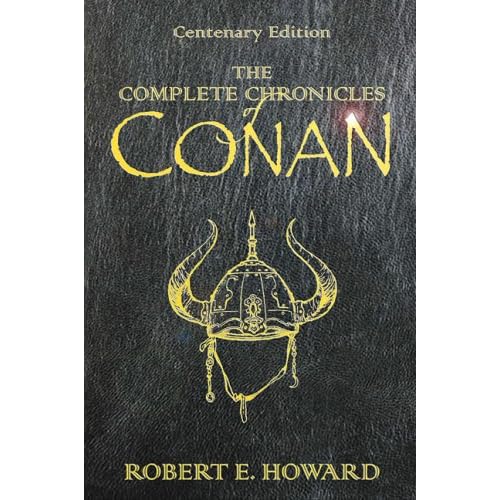
BtBG Reader - The Complete Chronicles of Conan


Now, I've read alot of Conan stories over the years. Those by both Howard and his devotees. I've got probably fifteen or so Conan paperbacks on my bookshelf, as well as a large box of the magazine-sized comics, and the first volume of the Savage Sword of Conan compilations Dark Horse is putting out.

The problem I've had is simply getting a handle on Howard's total body of Conan works. Not bundled with stories from other authors, or "revised" versions, but simply the real thing, as the author intended it, and complete from beginning to end. Three different books might have three different collections of stories, but almost invariably you're going to get at least one story in multiple books, and miss some stories you have yet to read. Naturally, this makes enjoying these stories as one complete collection a fan's nightmare (though, admittedly, an archivist's wet dream). If you've shared that frustration, then the Complete Chronicles is for you.

This book is massive, clocking in at just under a thousand pages, what they call a "trade paperback" (hardcover-sized paperback). The cover is black and marble-textured, which I suppose is supposed to represent leather. Sitting in Starbucks reading this thing feels like you've got a big Bible in front of you.

Which, as a pulp fantasy fan, I suppose this could actually be considered.

The stories are arranged in order of their publication, as opposed to chronologically as some other compilations have attempted to do. Strangely, it feels more natural, and works better towards giving you a feel of just what Howard was doing in writing these. Howard always claimed he never so much wrote as channeled these stories, as if the ghost of Conan was speaking through him, relating stories of his life as they happened to come up in conversation.

I'm sure I need waste no time reviewing the stories themselves, they are well known, especially to an old-school gaming audience, but if you have not yet read these stories (and I do know a couple of people who haven't, mainly because the movies turned them off), you really should. Howard possessed a brilliant economy of words, conveying depths in a few paragraphs that many writers can't achieve in multiple, wordy chapters. Howard presents no qualms of morality in his work; Conan is unabashedly motivated by his desires and passions: for lust, wealth, glorious combat, and adventure.

From a gaming perspective, the first work presented in the Complete Chronicles may be the most important: a short piece Howard wrote on the history of his setting Hyboria. He detailed the background of Conan's world and always stuck to it, which gives his stories a sense of realism, of having taken place in a world that actually existed. Someone creating their own campaign setting, or even sandbox, would be well served to follow this model.

Also including some never-completed works, poetry, snippets, and a nice afterword on Howard's life and philosphies, this is very much the "Complete" Compilation it claims to be.

Thursday, August 20, 2009

Megadungeon - New Spells


Of the many mages who have ventured into the Forsaken Halls, one of the most notorious, and most successful, is Feldspar the Sly. Driven by his obsession to find, and pass beyond, the legendary Black Gates, he has put together over a dozen expeditions deep into the Halls. A magical innovator, he has developed an admirable body of spells specifically directed towards achieving success in the underworld, and has been known to sell some of his work when short of funding for his ventures. Below are six of Feldspar's known works, and ambitious mages may seek out Feldspar directly to gain still more.


Feldspar's Wondrous Torch Treatment

Level: 1
Range: Not applicable
Duration: Special
One problem with carrying torches in the Megadungeon environment is that, while they illuminate the area for twenty or thirty feet around the party so they can see, the party is unfortunately visible from extremely far away to any hostiles that may be looking. Feldspar's Wondrous Torch Treatment will enspell up to one lit torch per level of the caster so that the light from the torches is not visible from more than thirty feet away, allowing the party to move more stealithly through the underworld. When the torches gutter out, the spell fizzles as well.

Feldspar's Reliable Rustproofing
Level: 1
Range: 10'
Duration: 1 Turn
Never one to venture into the underworld without an extensive posse of well-armed retainers, Feldspar tired of seeing them disarmed and nuetralized by the infamous Rustmonsters lurking on the second level, seemingly at every turn. His Reliable Rustproofing prevents rusting from occuring within a ten foot radius of himself for 1 turn, thus giving his men-at-arms enough time to dispatch the nuisances.

Feldspar's Wayfinder
Level: 1
Range: personal
Duration: 1 Hour
One of Feldspar's greatest fears was becoming lost in the underworld, stemming from the time one of his retainers stumbled into a pit filled with acid, ruining the party's map. Feldspar's Wayfinder allows the caster to unerringly know the fastest way to the surface, for one hour.

Feldspar's Phantasmal Retreat
Level: 2
Range: 10'
Duration: 1 round
Feldspar's Phantasmal Retreat creates illusory versions of the caster and any allies within ten feet, and renders the same folks briefly invisible. This allows for an outmatched party to flee a combat that is simply not going their way, free from the devasting attacks often incurred in such a full-scale retreat.

Feldspar's Pervasive Charming
Level: 2
Range: 30'
Duration: 3 rounds
Feldspar's Pervasive Charming temporarily enchants every drawn weapon within 30' for three rounds. This is extremely helpful in situations where a hostile can only be hit by magical weapons, but bear in mind that the radius may include the enemy's weapons in well. The spell imparts no actual plus to hit or damage, but is effective against resistances of up to +3.

Feldspar's Enforced Hesitation
Level: 3
Range: 120'
Duration: 1d2 rounds
Feldpar's Enforced Hesitation effectively dazes a group of enemies in a 20' radius, leaving them uncertain of what to do, and therefore inactive for up to 2 rounds (no save!). An excellent way to turn the tide when combat just isn't going the party's way, allow the party to burst through and pass a large group of guardians, or simply to help get the drop on enemies in an ambush.

LinkWithin

Related Posts Plugin for WordPress, Blogger...